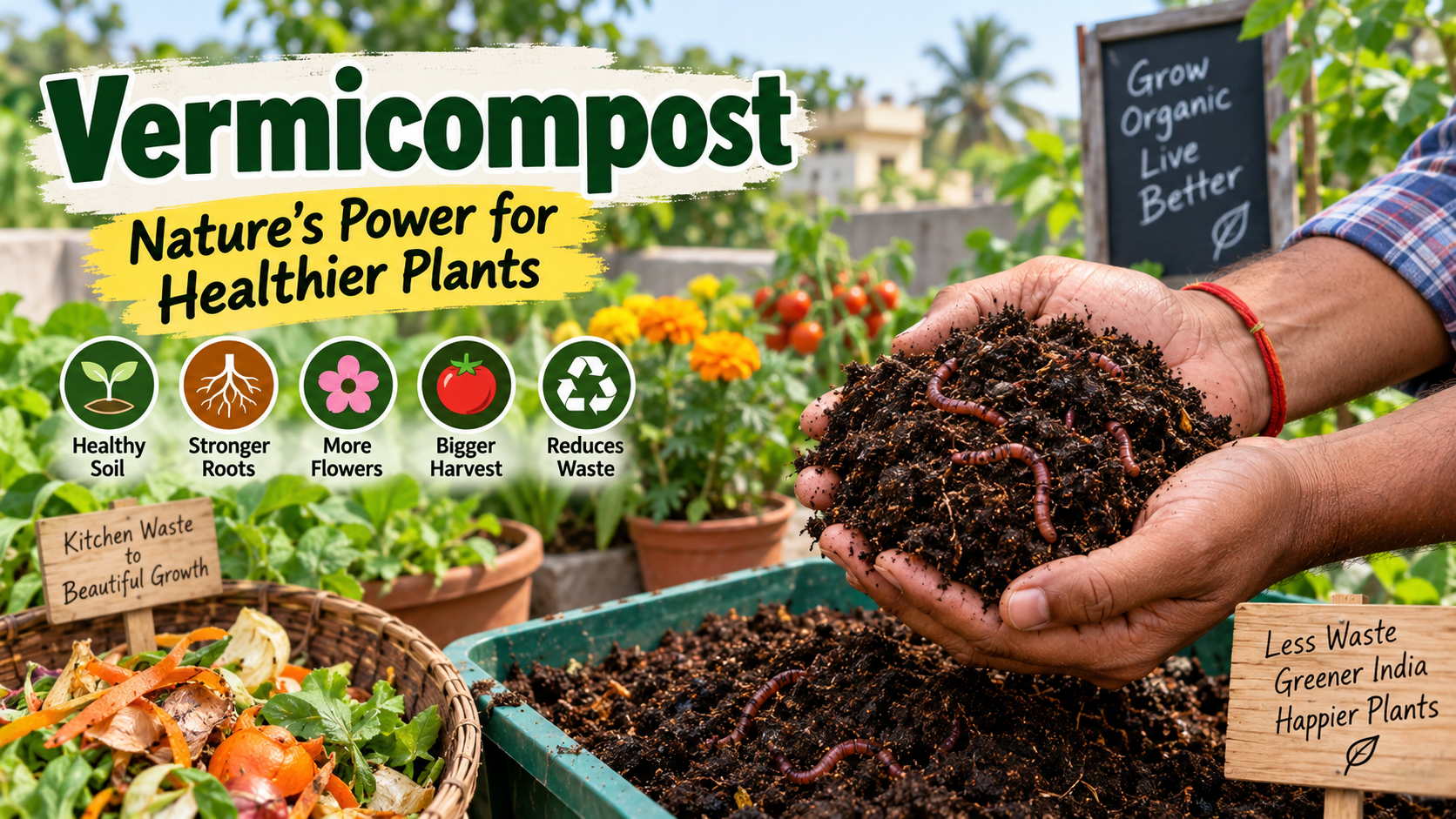
Healthy plants always begin with healthy soil. While chemical fertilizers can provide nutrients quickly, they often do little to improve the overall quality of the soil. Organic amendments, on the other hand, work more gradually and support the soil ecosystem itself. Among the many organic fertilizers available to gardeners, vermicompost is one of the most valuable and effective choices.
Often called black gold for the garden, vermicompost is a nutrient-rich organic material produced through the natural decomposition of biodegradable waste with the help of earthworms. It improves soil structure, supports beneficial microorganisms, encourages healthy root development and helps plants grow more vigorously.
Whether you grow vegetables on a rooftop, flowers in pots, houseplants indoors or crops in an open garden, vermicompost can become an important part of your gardening routine.
In this detailed guide, you will learn what vermicompost is, how it is made, its benefits, nutrient content, how to use it for different plants, and how to prepare vermicompost at home.
What Is Vermicompost?
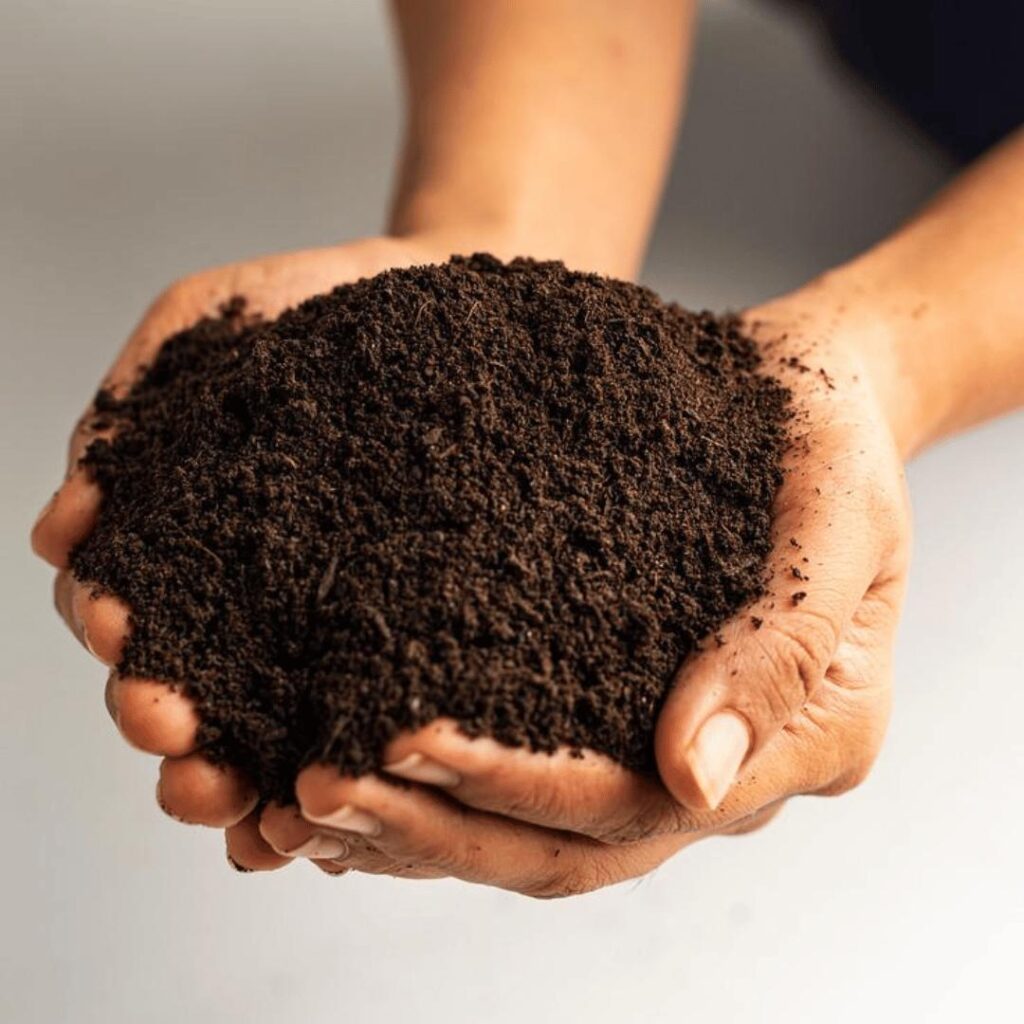
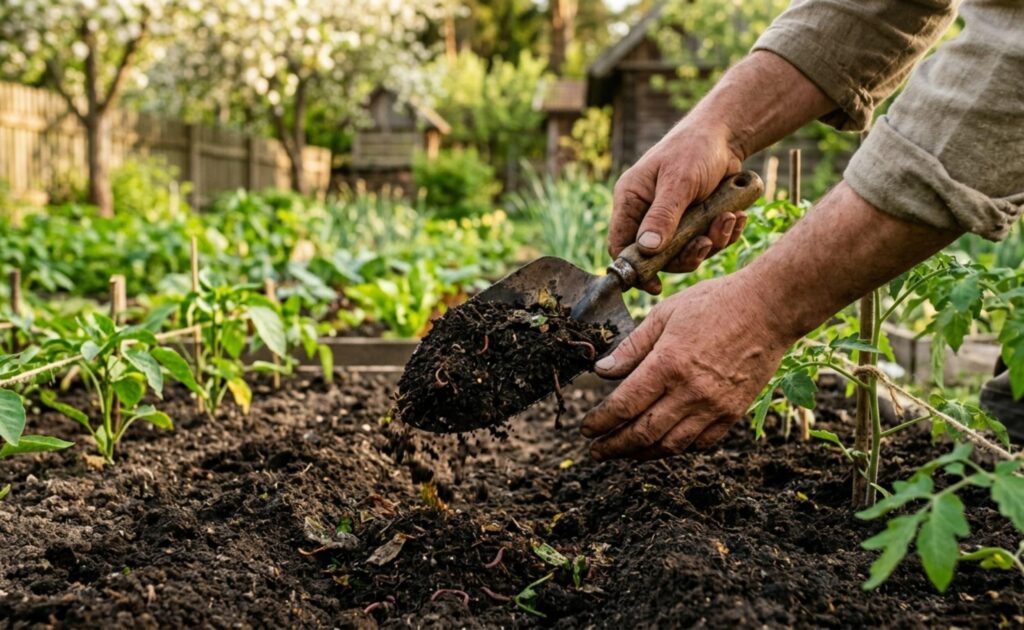
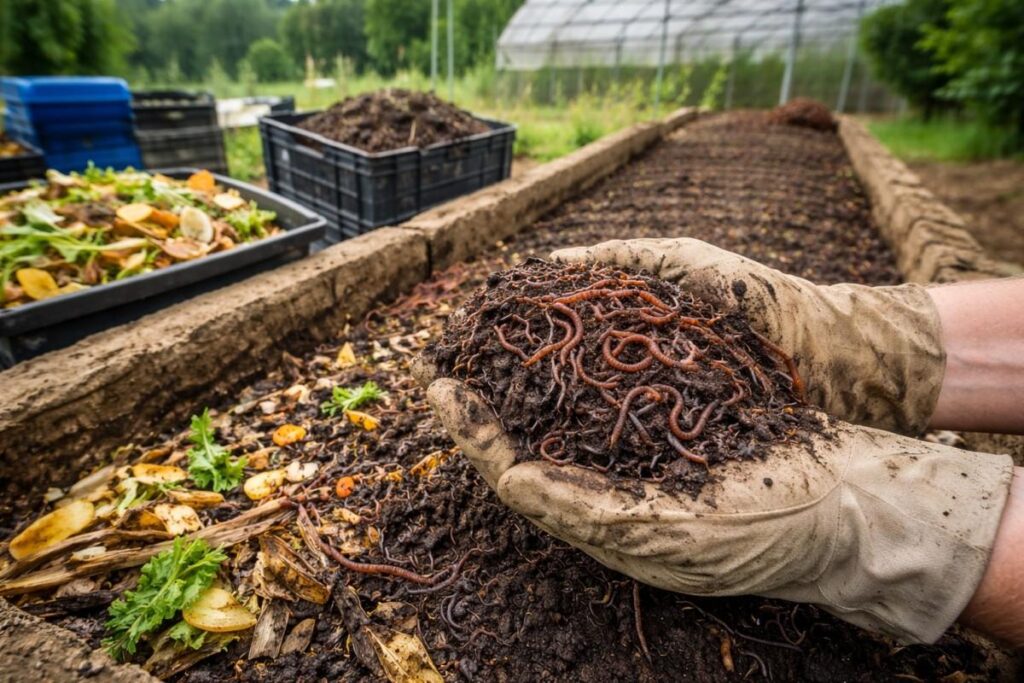
Vermicompost is a natural organic manure produced when specific types of earthworms process decomposing organic materials. The worms consume biodegradable waste such as vegetable scraps, dry leaves and other organic matter. After digestion, the material is converted into fine, dark and nutrient-rich castings.
These castings contain organic matter, beneficial microorganisms and plant nutrients in forms that can support healthy plant growth.
Unlike ordinary compost, vermicomposting involves the active participation of earthworms. This biological process helps break down organic materials into a finer and more stable form.
Good-quality vermicompost usually has the following characteristics:
- Dark brown to almost black colour
- Fine and crumbly texture
- Earthy smell
- High organic matter content
- Good moisture-holding ability
- Presence of beneficial microorganisms
A properly prepared vermicompost should smell like healthy soil. A strong rotten or unpleasant smell usually indicates excess moisture, poor aeration or unsuitable materials.
Why Is Vermicompost So Popular Among Gardeners?
The popularity of vermicompost comes from one simple fact: it does much more than just supply nutrients.
Plants do not grow in isolation. Their roots depend on the physical condition, biological activity and nutrient balance of the surrounding soil. Vermicompost contributes to all of these areas.
It can improve soil texture while gradually releasing nutrients. It also helps create a more favourable environment for beneficial microorganisms.
For home gardeners, this makes vermicompost particularly useful because it is gentle enough for regular use and suitable for a wide variety of plants.
Major Benefits of Vermicompost
1. Improves Soil Structure
One of the biggest advantages of vermicompost is its ability to improve soil quality.
Heavy soil can become more workable when organic matter is added, while sandy soil can gain better moisture retention. Vermicompost contributes to a more balanced growing medium by improving soil aggregation and texture.
Healthy soil allows roots to spread more easily and access water and nutrients efficiently.
2. Provides Essential Plant Nutrients
Vermicompost contains a range of plant nutrients, including nitrogen, phosphorus and potassium, along with several micronutrients.
The exact nutrient content depends on the materials used during composting, the earthworm species and the production process.
Instead of acting like a highly concentrated chemical fertilizer, vermicompost generally provides nutrients more gradually.
This makes it particularly useful for:
- Flowering plants
- Vegetable plants
- Fruit plants
- Indoor plants
- Seedlings
- Herbs
- Lawn and ornamental plants
3. Encourages Better Root Growth
Healthy roots are essential for healthy plants.
The organic matter in vermicompost helps create a favourable root environment. When soil remains loose, biologically active and capable of holding adequate moisture, plant roots can establish themselves more effectively.
Strong roots eventually support better leaf growth, flowering and fruit production.
4. Supports Beneficial Soil Microorganisms
A healthy garden soil contains a complex community of microorganisms.
Vermicompost contributes organic matter that can support biological activity in the soil. Beneficial microorganisms play an important role in nutrient cycling and overall soil health.
This is one reason why experienced organic gardeners often focus not only on feeding plants but also on feeding the soil.
5. Improves Water-Holding Capacity
Plants need consistent moisture, but maintaining that balance can be difficult, especially in containers.
Organic matter helps soil retain moisture without necessarily making it permanently waterlogged.
Adding vermicompost to potting mixtures can improve moisture retention, which is particularly useful during hot weather.
However, vermicompost should still be combined with materials that provide proper drainage.
6. Helps Produce Healthier and More Vigorous Plants
Regular use of vermicompost can support overall plant health.
Gardeners often use it throughout the growing season because it is relatively gentle compared with highly concentrated fertilizers.
When used correctly as part of a balanced gardening routine, it can contribute to:
- Better foliage development
- Improved root systems
- More vigorous plant growth
- Healthier soil
- Improved flowering potential
- Better overall plant performance
Typical Nutrient Content of Vermicompost
The exact composition of vermicompost varies significantly depending on the raw materials and production method. Therefore, nutrient values should be considered approximate.
| Component | Typical Approximate Range |
|---|---|
| Nitrogen (N) | 1.0–1.5% |
| Phosphorus (P) | 0.5–1.0% |
| Potassium (K) | 0.5–1.2% |
| Calcium | 1.0–2.0% |
| Magnesium | 0.3–0.5% |
| Organic Carbon | 12–18% |
| pH | 6.5–7.5 |
| Moisture | 20–30% |
Important: The nutrient content of commercial vermicompost can vary considerably. Always check the product label or laboratory analysis when precise nutrient management is required.
Vermicompost vs Chemical Fertilizer vs Farmyard Manure
| Feature | Vermicompost | Chemical Fertilizer | Farmyard Manure |
|---|---|---|---|
| Source | Organic waste processed by earthworms | Synthetic or mineral-based | Animal waste |
| Nutrient release | Gradual | Usually quick | Moderate |
| Improves soil structure | Yes | Limited | Yes |
| Supports soil biology | Yes | Limited | Moderate |
| Suitable for pots | Excellent | Requires careful dosing | Good |
| Environmental impact | Generally low | Can be harmful if misused | Generally low |
| Best use | Home gardens and organic farming | Targeted nutrient correction | Soil conditioning |
The purpose of this comparison is not to suggest that one input can always replace every other fertilizer. Plants may have different nutritional requirements depending on their growth stage.
However, vermicompost is particularly valuable as a soil conditioner and organic nutrient source.
How to Use Vermicompost for Different Plants
One of the biggest advantages of vermicompost is its versatility.
For Flowering Plants
Mix vermicompost into the soil before planting or apply it around the base of established plants.
General guideline: Add approximately 10–20% vermicompost to a potting mixture.
For established plants, apply a small layer around the root zone and gently mix it into the topsoil.
Avoid piling large quantities directly against the stem.
For Vegetable Plants
Vegetables are heavy feeders and benefit from fertile soil.
Before planting, mix vermicompost into the growing bed. During the growing season, additional vermicompost can be applied as a top dressing.
It is useful for vegetables such as:
- Tomato
- Brinjal
- Chilli
- Capsicum
- Cucumber
- Gourds
- Beans
- Leafy vegetables
For Potted Plants
For container gardening, moderation is important.
A practical potting mixture may include garden soil, compost, cocopeat or other suitable growing materials along with vermicompost.
For an established medium-sized pot, gardeners can generally apply a few tablespoons to a handful depending on plant size and container volume.
Mix lightly into the upper layer of soil and water afterwards.
For Seedlings
Young seedlings do not need excessive fertilizer.
A small proportion of well-matured vermicompost can be mixed into the growing medium to provide organic matter and mild nutrition.
Avoid using immature compost because it may generate heat or contain materials that are not fully decomposed.
Quick Guide: How Much Vermicompost Should You Use?
| Plant Type | Recommended General Use |
|---|---|
| Small flowering plants | 1–2 tablespoons every few weeks |
| Medium-sized potted plants | 2–4 tablespoons |
| Large pots | 1–2 cups |
| Vegetable garden beds | Mix into planting soil |
| Flower beds | Add before planting and top dress periodically |
| Seedlings | Use a small percentage in the growing mix |
| Indoor plants | Small quantity every 30–45 days |
These quantities are general guidelines. The ideal amount depends on plant size, pot size, soil fertility and the quality of the vermicompost.
How to Make Vermicompost at Home
Making vermicompost at home is an excellent way to recycle kitchen and garden waste.
You do not need a large farm. A properly designed container or composting bed can be used in a garden, terrace or suitable outdoor space.
Step 1: Choose a Suitable Container
You can use:
- Plastic bins
- Cement tanks
- Wooden boxes
- Special vermicompost beds
- Large buckets with drainage arrangements
The container should provide proper drainage and air circulation.
Avoid keeping the composting system under direct, intense sunlight.
Step 2: Prepare the Bedding
Earthworms need a comfortable environment.
Suitable bedding materials include:
- Partially decomposed leaves
- Cocopeat
- Shredded cardboard
- Dry organic matter
- A small amount of mature compost
The bedding should remain moist but never waterlogged.
Step 3: Add Suitable Organic Waste
Add biodegradable materials gradually.
Good materials include vegetable scraps, fruit peels, tea leaves, coffee grounds and garden waste.
Large pieces should be chopped into smaller pieces to speed up decomposition.
Step 4: Introduce Composting Earthworms
Special composting earthworms are commonly used because they efficiently process organic material near the surface.
The worms should be introduced only after creating a suitable environment with proper moisture and temperature.
Step 5: Maintain Proper Moisture
The composting material should feel similar to a squeezed-out sponge.
If the material becomes too dry, the worms may become inactive.
If it becomes excessively wet, oxygen levels can decrease and unpleasant smells may develop.
Step 6: Allow Nature to Work
Over time, the worms and microorganisms gradually process the organic material.
The decomposition period depends on:
- Temperature
- Moisture
- Type of waste
- Quantity of material
- Earthworm activity
Avoid disturbing the system unnecessarily.
Step 7: Harvest the Vermicompost
When the material becomes dark, fine and soil-like, it is generally ready for harvesting.
Separate the worms carefully and return them to fresh bedding for the next composting cycle.
The finished vermicompost can be dried slightly in shade before storage.
What Can You Put in a Vermicompost Bin?
Recommended Materials
| Good Materials | Why They Work |
|---|---|
| Vegetable scraps | Easily biodegradable |
| Fruit peels | Good organic material |
| Dry leaves | Adds carbon and structure |
| Tea leaves | Useful in moderation |
| Coffee grounds | Can be added in moderation |
| Grass clippings | Rich organic matter |
| Shredded paper | Useful carbon source |
| Cocopeat | Improves bedding structure |
| Aged cow dung | Commonly used in vermicomposting |
Materials to Avoid
| Avoid These Materials | Reason |
|---|---|
| Plastic | Non-biodegradable |
| Glass | Dangerous and non-compostable |
| Metal | Non-biodegradable |
| Large amounts of meat | Can attract pests |
| Fish waste | Can create odour issues |
| Oily food | Decomposes poorly |
| Excess spicy food | May disturb the composting environment |
| Chemically treated plant waste | May harm worms |
| Large quantities of citrus | Can affect the compost environment |
Common Mistakes When Using Vermicompost
Even though vermicompost is a natural product, improper use can still create problems.
Mistake 1: Using Too Much
More fertilizer does not always mean better growth.
Excessive organic amendments can make a potting mixture overly rich or affect drainage.
Use vermicompost as part of a balanced growing medium.
Mistake 2: Buying Poor-Quality Vermicompost
Not every product sold as vermicompost is properly processed.
Poor-quality material may contain:
- Undecomposed waste
- Excess moisture
- Weed seeds
- Unpleasant odour
- Excessive sand or soil
Choose mature, clean and well-processed vermicompost from a reliable source.
Mistake 3: Keeping the Compost Bin Too Wet
Excess water reduces oxygen availability.
A healthy vermicomposting system should remain moist but well aerated.
Mistake 4: Keeping Earthworms in Direct Sunlight
Earthworms are sensitive to excessive heat.
Always keep the vermicomposting system in a shaded and protected location.
Mistake 5: Adding Unsuitable Kitchen Waste
Avoid treating a vermicompost bin like a general garbage container.
Only biodegradable and worm-friendly materials should be added.
How to Identify Good Quality Vermicompost
Before buying vermicompost, check the following characteristics:
Colour
Good vermicompost is generally dark brown or black.
Texture
It should feel loose, fine and crumbly.
Smell
Healthy vermicompost should have an earthy smell similar to forest soil.
Moisture
It should not be excessively wet or dripping.
Maturity
The original organic waste should be largely decomposed and difficult to identify.
Frequently Asked Questions About Vermicompost
Is vermicompost better than ordinary compost?
Both are valuable. Vermicompost is produced with the involvement of earthworms and usually has a finer texture. Ordinary compost is produced primarily through microbial decomposition. Both can improve soil and provide organic matter.
Can vermicompost burn plants?
Well-matured vermicompost is generally mild compared with concentrated chemical fertilizers. However, excessive application is still unnecessary. Use reasonable quantities as part of a balanced growing medium.
How often should vermicompost be applied?
For most home garden plants, small applications every few weeks or once a month are commonly used. The frequency should depend on the plant, growing medium and other fertilizers being used.
Can vermicompost be used for all plants?
It is suitable for a wide range of flowering plants, vegetables, herbs, fruit plants and ornamental plants. However, every plant has different nutritional requirements.
Can I use vermicompost for indoor plants?
Yes. Well-matured vermicompost is suitable for indoor plants when used in moderate quantities.
How long can vermicompost be stored?
Vermicompost should be stored in a cool, shaded location with proper ventilation. Avoid prolonged exposure to direct sunlight, excessive moisture or complete drying.
Final Thoughts: Why Every Gardener Should Consider Vermicompost
Gardening is not just about making plants grow faster. The long-term health of the soil matters just as much.
Vermicompost offers a practical way to recycle organic waste and return valuable organic matter to the soil. It can improve soil texture, support beneficial biological activity and provide a gentle source of plant nutrition.
For home gardeners, it is one of the simplest ways to move towards more sustainable gardening.
Whether you have a small balcony garden with ten pots or a large vegetable plot, adding quality vermicompost to your gardening routine can make a noticeable difference over time.
Healthy soil creates stronger roots. Stronger roots create healthier plants. And healthier plants make a garden truly rewarding.