Winter is one of the most beautiful seasons for gardening in India. The pleasant weather, cooler temperatures, and bright sunshine create ideal conditions for growing a wide variety of colourful flowering plants. Whether you have a large garden, rooftop terrace, balcony, or just a few pots, winter flowering plants can transform your space into a vibrant and cheerful garden.
If you’re planning your winter garden, choosing the right flowers is important. Some plants grow easily from seeds, require minimal maintenance, and reward you with stunning blooms for several months.
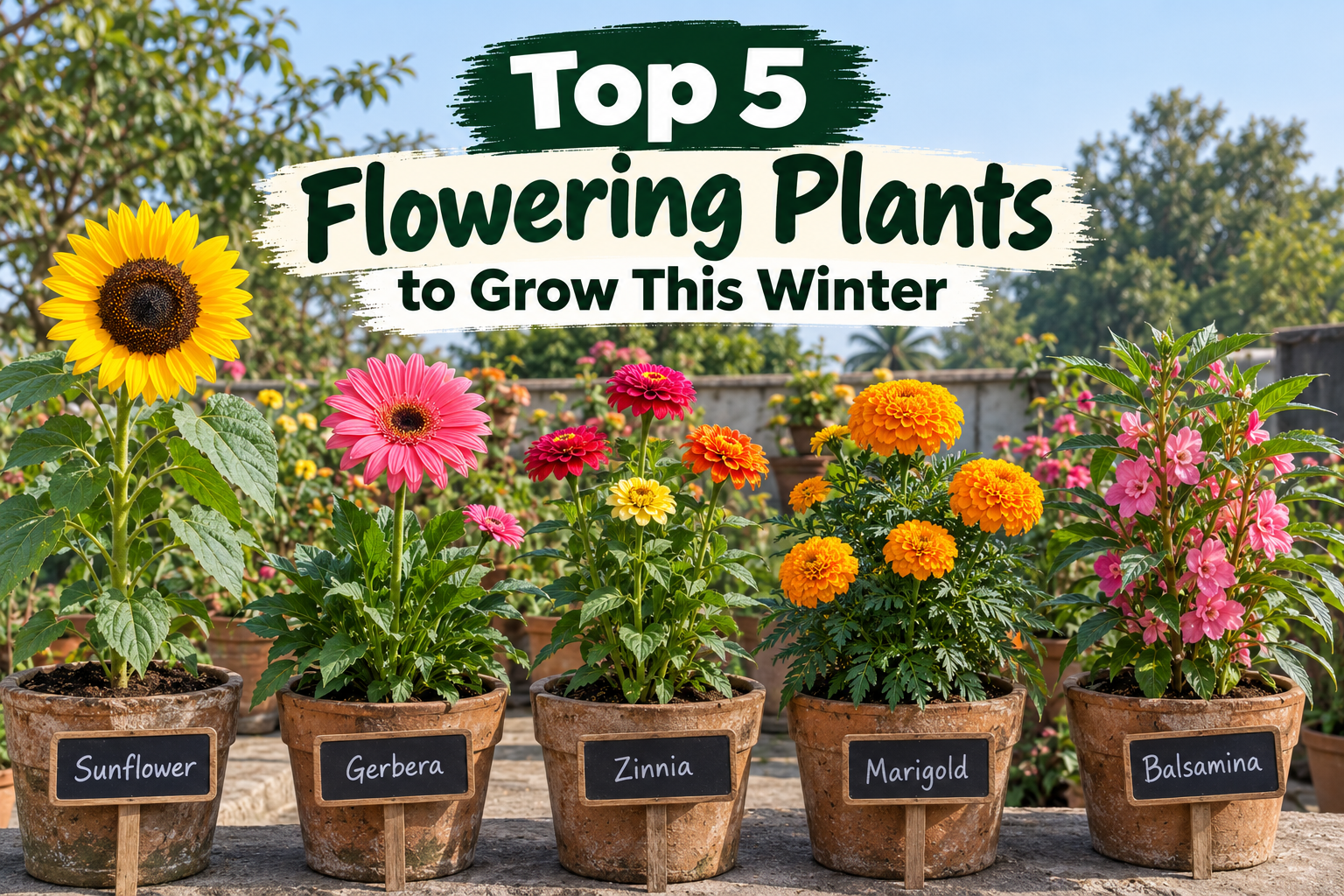
In this article, we will explore the top 5 flowering plants to grow this winter: Sunflower, Gerbera, Zinnia, Marigold, and Balsamina. These flowers are colourful, beginner-friendly, and perfect for Indian home gardens.
1. Sunflower – The Bright Star of Your Winter Garden
Sunflower is one of the most attractive and easily recognizable flowers in the world. With its large golden-yellow petals and dark centre, a blooming sunflower instantly becomes the highlight of any garden.
Many gardeners think sunflowers require a large farm or open field, but several varieties can be successfully grown in home gardens and containers as well. Winter is a great time to grow sunflowers in many parts of India because the pleasant weather helps young plants establish properly.
How to Grow Sunflower
Sunflower seeds can be directly sown in pots or garden soil. Choose a location that receives at least 5–6 hours of direct sunlight daily. Use loose, well-draining soil enriched with organic compost.
Water regularly during the early growth stage, but avoid keeping the soil constantly wet. Once established, sunflower plants are relatively easy to maintain.
Why You Should Grow Sunflower
- Produces large and attractive flowers
- Easy to grow from seeds
- Perfect for sunny balconies and gardens
- Attracts bees and pollinators
- Creates a stunning visual impact
Best for: Sunny gardens, terraces, large pots, and beginners.
2. Gerbera – Add Premium Colours to Your Winter Garden
Gerbera is known for its large, colourful, daisy-like flowers. Available in shades of red, yellow, orange, pink, white, and many other colours, gerberas can give your garden a premium and professional appearance.
Gerbera flowers are especially popular because of their long-lasting blooms and ornamental value. They look beautiful in pots, flower beds, and even as cut flowers for indoor decoration.
How to Grow Gerbera
Gerbera plants prefer bright sunlight, but they perform best when protected from extremely harsh afternoon heat. During winter, provide plenty of morning sunlight for healthy growth and abundant flowering.
Use well-draining soil rich in organic matter. Avoid excessive watering because waterlogging can cause root problems.
Regular feeding with a balanced fertilizer during the growing season can encourage stronger plants and bigger flowers.
Why You Should Grow Gerbera
- Large and colourful flowers
- Excellent for pots and containers
- Premium ornamental appearance
- Long flowering period with proper care
- Beautiful as cut flowers
Best for: Balconies, terraces, decorative gardens, and container gardening.
3. Zinnia – A Colourful and Easy-to-Grow Flower
Zinnia is one of the easiest flowering plants for beginner gardeners. It grows quickly from seeds and produces an abundance of colourful flowers in shades of pink, red, yellow, orange, purple, and white.
Zinnias are perfect for gardeners who want maximum flowers with minimum effort. Their bright blooms can instantly make a garden look lively and colourful.
Different varieties of zinnia are available, ranging from compact dwarf plants suitable for pots to taller varieties ideal for flower beds.
How to Grow Zinnia
Sow zinnia seeds directly in loose and well-draining soil. Keep the growing medium slightly moist until germination.
Zinnia plants love sunlight, so choose a bright location. Once the plants start growing, avoid overwatering. Proper air circulation is also important for keeping plants healthy.
Removing old and faded flowers regularly encourages the plant to produce more blooms.
Why You Should Grow Zinnia
- Extremely easy to grow from seeds
- Fast-growing flowering plant
- Available in multiple colours
- Produces plenty of flowers
- Suitable for pots and garden beds
Best for: Beginners, balconies, terraces, and colourful flower gardens.
4. Marigold – The Most Popular Winter Flower in India
No Indian winter garden feels complete without marigolds. Marigold is one of the most popular flowering plants because it is easy to grow, highly productive, and extremely colourful.
The bright yellow and orange flowers create a festive atmosphere and are widely used for decoration, religious ceremonies, festivals, and landscaping.
Marigolds are available in different sizes and varieties. French marigolds are generally compact and suitable for pots, while African marigolds produce larger flowers and taller plants.
How to Grow Marigold
Marigold seeds can be easily grown in seed trays, pots, or directly in garden beds. The plants require plenty of sunlight for healthy growth and flowering.
Use well-draining soil mixed with compost. Water when the top layer of soil feels dry, but avoid overwatering.
Pinching the growing tips during the early stage can encourage bushier growth and more flowering branches.
Why You Should Grow Marigold
- Very easy to grow
- Produces abundant flowers
- Perfect for Indian weather conditions
- Available in bright yellow and orange colours
- Ideal for pots and garden beds
Best for: Beginners, home gardens, terraces, balconies, and commercial flower cultivation.
5. Balsamina – A Beautiful Flowering Plant for Colourful Gardens
Balsaminia, also popularly known as Balsam, is a beautiful flowering plant loved for its vibrant and delicate blooms. The plant produces attractive flowers in colours such as pink, red, purple, white, and mixed shades.
Balsaminia is a wonderful choice for gardeners who want something different from traditional winter flowers. When planted in groups, these plants create a beautiful mass of colour.
The flowers have a soft and elegant appearance, making them perfect for decorative gardens and containers.
How to Grow Balsaminia
Balsaminia grows well in fertile, loose, and well-draining soil. Sow the seeds carefully and keep the soil moderately moist during germination.
Provide bright sunlight or partial sunlight depending on your local climate. Avoid excessive watering, especially during cooler weather.
Adding organic compost before planting helps improve soil fertility and supports healthy flowering.
Why You Should Grow Balsaminia
- Produces attractive and colourful flowers
- Easy to grow from seeds
- Suitable for pots and garden beds
- Creates a beautiful mass flowering effect
- Perfect for ornamental gardening
Best for: Decorative gardens, balconies, containers, and flower beds.
Tips for Growing Winter Flowering Plants Successfully
Growing beautiful flowers is not only about choosing the right seeds. Proper soil preparation and regular care play an important role in healthy plant growth.
| Gardening Tip | What to Do | Why It Matters |
|---|---|---|
| Choose Good Quality Seeds | Select fresh, healthy, and high-quality seeds from a reliable source. | Better germination and stronger, healthier plants. |
| Use Well-Draining Soil | Mix garden soil with compost and materials that improve drainage. | Prevents waterlogging and promotes healthy root growth. |
| Provide Enough Sunlight | Keep plants in a location receiving adequate direct sunlight. | Sunlight supports healthy growth and abundant flowering. |
| Avoid Overwatering | Water according to soil moisture instead of following a fixed daily schedule. | Prevents root rot and other problems caused by excess moisture. |
| Feed Your Plants Regularly | Apply organic compost or a balanced fertilizer after plants become established. | Provides essential nutrients for healthy growth and continuous flowering. |
| Remove Old Flowers | Regularly remove faded and dried flowers from the plant. | Encourages the plant to produce more new flowers and extends the flowering period. |
Following these simple winter gardening tips can make a significant difference in the health and flowering performance of your plants. With good-quality seeds, proper sunlight, balanced watering, and regular nutrition, your winter garden can stay colourful and full of blooms throughout the season.
Which Are the Best Winter Flowering Plants for Beginners?
If you are new to gardening and want easy results, Marigold and Zinnia are excellent choices. Both plants are easy to grow from seeds and produce plenty of colourful flowers.
For gardeners looking for something more dramatic, Sunflower can create a stunning focal point.
If you want a premium ornamental look, Gerbera is an excellent addition to your garden.
And for gardeners looking to add soft, colourful blooms, Balsamina is a wonderful choice.
Final Thoughts
Winter is the perfect time to bring colour and life into your garden. With the right selection of flowering plants, even a small balcony can become a beautiful blooming space.
Sunflower, Gerbera, Zinnia, Marigold, and Balsamina are five excellent choices for gardeners who want colourful flowers, easy maintenance, and rewarding results.
Start planning your winter garden early, prepare healthy soil, choose quality seeds, and provide proper sunlight and watering. With a little care and patience, your garden can remain full of beautiful flowers throughout the season.
So, which flowering plant are you growing this winter? Start with these five beautiful varieties and create your own colourful winter flower garden.
Frequently Asked Questions About Winter Flowering Plants
Which flowers are best to grow in winter in India?
Some of the best winter flowering plants include Marigold, Zinnia, Sunflower, Gerbera, Balsaminia, Petunia, Dahlia, Pansy, Aster, and Calendula.
Which winter flowers are easiest to grow from seeds?
Marigold, Zinnia, Sunflower, and Balsaminia are among the easiest flowering plants to grow from seeds.
Can I grow winter flowers in pots?
Yes. Most winter flowering plants can be successfully grown in pots and containers, provided they receive sufficient sunlight and are planted in well-draining soil.
How much sunlight do flowering plants need?
Most flowering plants perform best with at least 4–6 hours of direct sunlight daily. Sunflower and Marigold generally prefer more sunlight.
When should I plant winter flower seeds?
The ideal sowing time varies depending on your region and local climate. In many parts of India, winter flower seeds are commonly sown from late monsoon to early winter for the best flowering season.